AAM Business Group
One website for four very different businesses, from AI software to heavy-machinery parts.
I designed AAM Business Group’s website: five pages for desktop and mobile, a coming soon page, a moving partner strip and a developer handoff. The group runs Technology & AI, BPO & Global Outsourcing, Huloo Digital Ventures and Industrial Trading & Engineering, with offices in the US, Ethiopia, India and the UAE.

Where it started
The brief
AAM is a US-headquartered group with businesses that have little in common on the surface: software and AI services, outsourced teams in Ethiopia, the Huloo mobility and smart-farming brands, and industrial equipment trading. A visitor could arrive looking for any one of them, or for a partnership with the group itself.
The website had to explain how the four fit together in a few seconds, then send each visitor to the right business, enquiry or company site.
What I designed
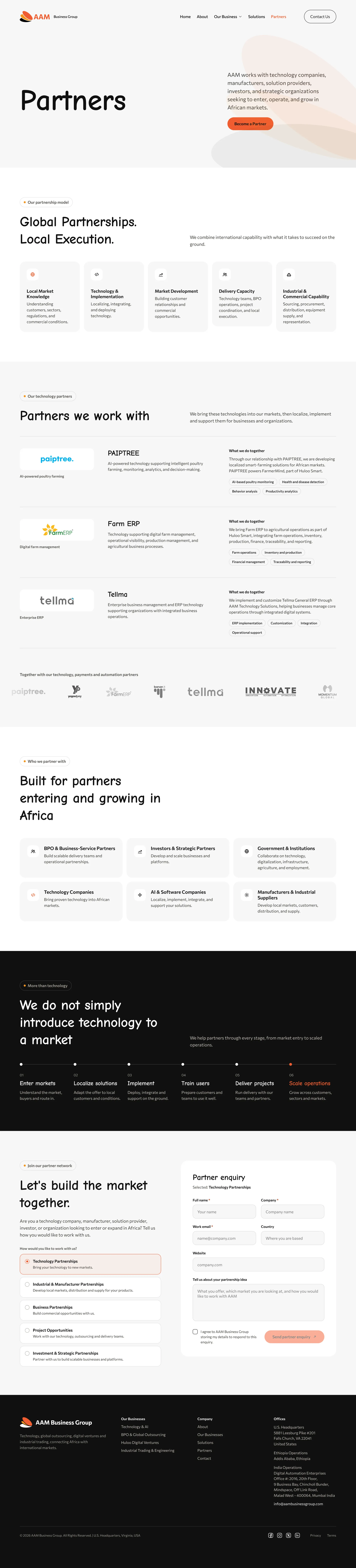
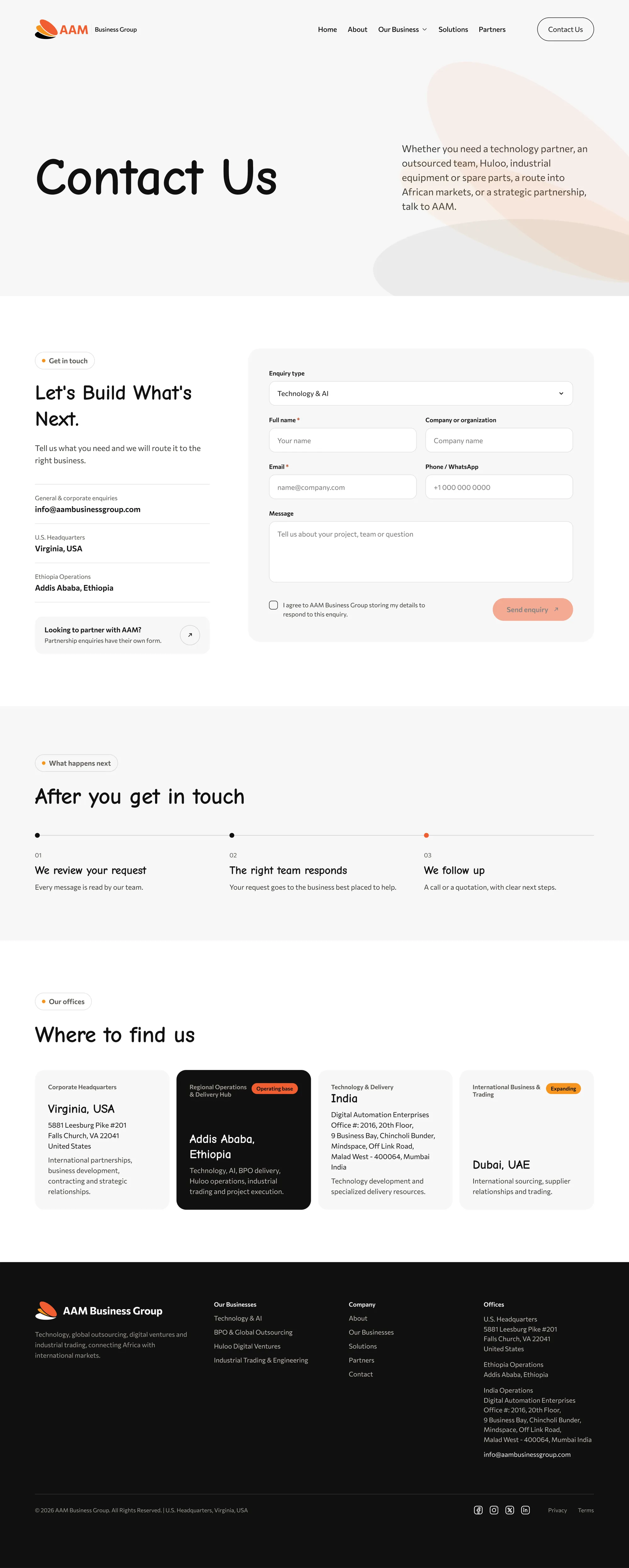
Home, Businesses, About, Partners and Contact for desktop and mobile, the mobile menu and dropdowns, a coming soon page for businesses that are not live yet, the motion for the partner logo strip, background and brand assets, and a developer handoff page for the build.
What a visitor reads, in order
A group website gets a few seconds to answer one question: what is this company? I planned the homepage as a reading order, and checked each step against how people actually scan a page.
The promise
Three short lines: building technology, connecting markets, delivering solutions. The first thing read is the thing remembered.
Two buttons, not five
Explore our businesses or Partner with us. One for each visitor type, nothing else above the fold.
Four businesses, four cards
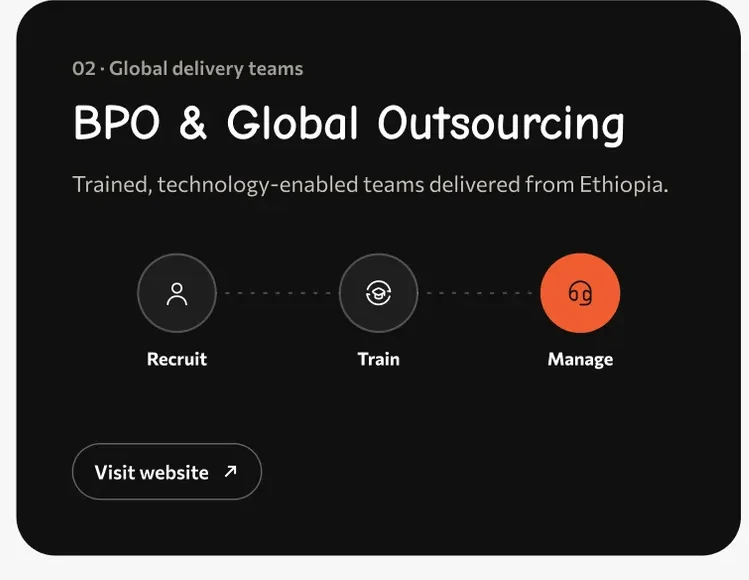
Each business gets a numbered card with one sentence and its tags, so the group reads as four clear parts.
Proof of reach
The map of offices and the partner strip answer “are they real?” before anyone reaches the contact form.
If a visitor leaves after ten seconds, they should still be able to say what AAM does and where it works.
The test I designed against
Who visits, and why
AAM runs four very different businesses across four countries. In conversations with the team, two visitors came up: people trying to understand what the group does, and partners arriving with a specific deal in mind. I also reviewed how other diversified groups present several businesses without losing the group story.
“What exactly does this group do?”
- A one-line answer
- A clear split by business
- Where they operate
- Walls of corporate text
- No route into a single business
“I know what I want. Where do I start?”
- A direct partner route
- Contacts per business
- Proof of reach
- Generic contact forms
- Hunting through pages
Five pages, two routes
The calls that shaped it
1. Say what the group does in one line, then split by business
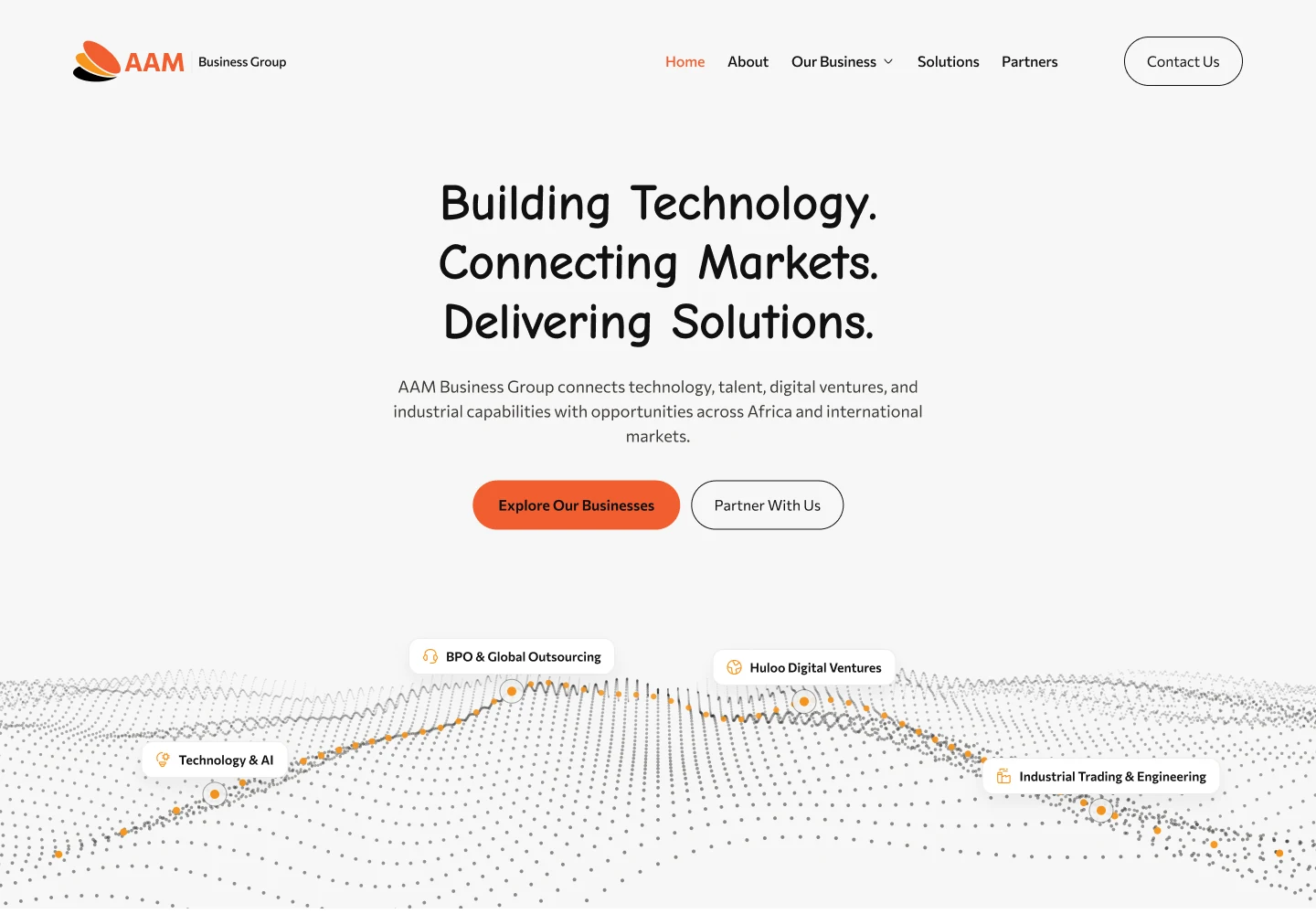
The homepage opens with three short lines: Building Technology. Connecting Markets. Delivering Solutions. Under it, a wave of points connects the four businesses, each labelled, so the group reads as one network before any detail.
Two buttons follow, Explore Our Businesses and Partner With Us, because visitors arrive either to look around or with a deal in mind.

2. Give each business its own card, with a way out
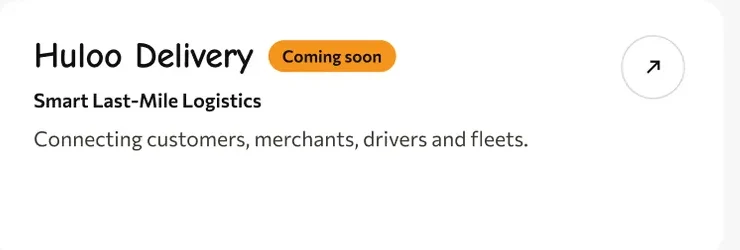
Four Businesses. One Group. Each card names the business, says what it does in one sentence and has a Visit website link. Huloo Digital Ventures lists its own brands: Huloo Ride, Huloo Smart, and Huloo Delivery and Huloo Mart marked Coming soon.
Businesses that are not live yet go to a coming soon page instead of a dead link.

3. Show where the group works
On the homepage, Global Reach. African Execution. A map connects the Virginia headquarters with offices in Ethiopia, India and Dubai, and each office lists what it handles. For a group selling outsourcing and trading across borders, where the teams sit is part of the pitch.

4. Keep the same order on mobile
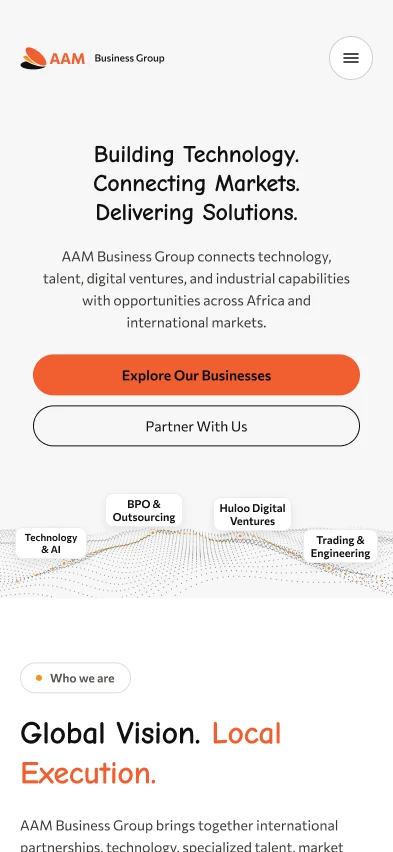
The mobile pages keep the same sequence as desktop: the line, the four businesses, the services, Huloo, trading, the map and the closing call to action. The menu opens into the same business and solution groups as the desktop dropdowns.


Every page
Choose a page and scroll through it.
One group, four businesses
The group’s orange marks action and the current page. Each business card shares the same structure, so a new business can join the site without a new layout. Dark cards are kept for outsourcing, the one business that sells people rather than products.
Type
We design, build and support software, AI, ERP and cloud solutions.
01 · AAM TECHNOLOGY SOLUTIONS
Components and states




More screens
Every group scrolls sideways. Tap a screen to see it larger.
Mobile
5What it delivered
A five-page responsive website with mobile layouts, a coming soon page, partner-strip motion, exported brand and background assets, and a handoff page for the developer. The website is live.
The next thing I would check is whether visitors can find the right business and enquiry route without scrolling the whole homepage.
When a group is made of unrelated businesses, the structure is the message. Separating the group, the business and the enquiry gave every page one job, and that made the rest of the decisions easier.
What I took from it